

A student can forget a whole lesson and still remember one sentence a teacher wrote on a sticky note.
That is the quiet power behind the best wishes for students from teachers. A good message takes ten seconds to read, and it can change how a student walks into the next test, the next school year, or the next chapter after graduation.
The hard part is the wording. “Good luck” feels thin, and a full paragraph feels like too much. Below are 270+ messages sorted by the moment a teacher is actually in: first days, exams, results, setbacks, farewells, and graduation.
Every message is written in a teacher’s voice and ready to personalize.
Key Takeaways
- Messages are grouped by moment (first day, exam, results, setback, farewell), so you can find the right one in seconds.
- A wish tends to land when it names one specific thing you noticed, credits effort over talent, and points forward.
- Before exams, confidence in a student’s preparation usually works better than pressure to succeed.
- One or two sentences suit sticky notes and whiteboards. Save longer messages for cards and end-of-year letters.
What Makes a Teacher’s Best Wishes Actually Land
Best wishes for students from teachers are short, sincere messages in which a teacher expresses belief in a student’s effort and future. They can mark a test, a new school year, a setback, or a goodbye. The same words mean something different coming from a teacher than from a classmate or a greeting card, because the student knows the teacher has watched them work.
Three things separate a wish that gets read once from one that gets kept:
- It is specific. “I noticed how you kept going on that problem” beats “You’re a great student.”
- It is about effort. Students can act on “you worked hard on this.” They can’t act on “you’re so smart.”
- It looks forward. The best notes end on something the student can step into, not just a pat on the back.
Keeping notes does seem to matter over time. Edutopia contributor John Tiersma wrote that he set aside time to write about five handwritten cards a week and ended one year with more than 100 personalized notes sent home to his seventh-grade students. In a summary of his article, one teacher recalled that a former student carried a seven-year-old note to college and displayed it above her desk. A few sincere sentences can outlast the school year.
The next section turns those three ingredients into a quick test you can run on any message. If you’re looking for messages going the other way, see our Teachers Day wishes, which are written for students and parents to send to teachers.
Ten Best Wishes for Students That Work Almost Anywhere
These suit most grade levels and situations. Swap in a name and one real detail to make them yours.
- “I noticed how long you stuck with that problem today. That patience will take you far. I’m proud of you.”
- “You don’t have to be perfect to be ready. Show up, do your best, and let me worry about the rest.”
- “Whatever happens this week, you are not behind in my eyes. You are on your way.”
- “I’m rooting for you, and not just for the grade. I’m rooting for the person who keeps trying.”
- “Your questions make my class better. Keep asking them wherever you go.”
- “My favorite moment of the day is watching you figure something out. Keep chasing that feeling.”
- “In my room, mistakes are just first drafts. Keep revising.”
- “I believe in you, and I’ve seen the proof. Go show yourself what I already know.”
- “Thank you for the kindness you showed your classmates this week. It didn’t go unnoticed.”
- “Wherever this year takes you, you will always be welcome back to say hello.”
The Specific–Effort–Forward Test for Writing Your Own
Before you pick a message from any list, run it through three questions. If it fails all three, it’s a greeting-card line. If it passes even two, it will feel like it came from you.
- Specific: does it name something this student actually did?
- Effort: does it credit what the student did, such as practice, persistence or a strategy, rather than a label like “smart” or “talented”?
- Forward: does it end somewhere the student can go next?
The effort question has research behind it. In a well-known set of experiments by Claudia Mueller and Carol Dweck, six studies found that praise for intelligence hurt students’ motivation more than praise for effort did, starting with fifth graders. A caution that gets lost in the retelling: Dweck’s own advice is to praise the process behind a result, and praising effort alone means little when a child isn’t doing well. So for a student who is struggling, pair the effort with a next strategy, such as “try the practice problems first.”
Before and After: Rewriting a Generic Wish
| Generic | Rewritten with the test |
| “Good luck on your test!” | “You’ve reviewed the vocabulary every morning this week. Trust that routine tomorrow.” |
| “You’re so smart!” | “The way you rebuilt that argument after my feedback showed real thinking. Keep revising like that.” |
| “Don’t give up.” | “Your last two lab reports got clearer each time. Try outlining first on the next one.” |
| “Have a great year!” | “I loved your questions on the first day. Keep them coming this year.” |
| “Best wishes for the future.” | “You organized the whole class project without being asked. Whatever you choose next, that skill will help.” |
Notice the rewrites aren’t longer. They’re just more specific.
How Long Should the Message Be by Age?
This is a practical guide drawn from common classroom habits, not a research finding. Adjust it to your students.
| Age group | Best length | What tends to work |
| 5–7 | One short sentence | Concrete, warm, with a drawing or sticker |
| 8–11 | One to two sentences | A named strength plus a friendly nudge |
| 12–14 | Two sentences | Plain language, no gushing, a specific detail |
| 15–18 | Two to four sentences | Respect for their independence, a real forward look |
Short Best Wishes for Students (Sticky Notes and Whiteboards)
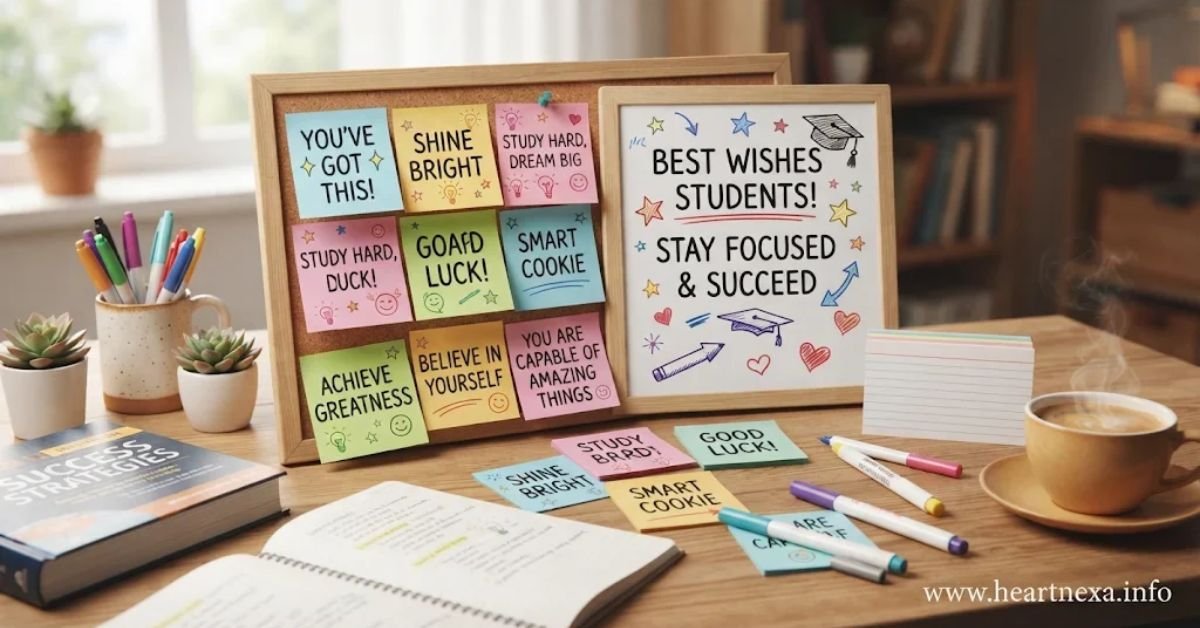
Short wishes do most of their work through placement: the corner of a quiz, the inside of a planner, the morning whiteboard. Keep them readable at a glance and warm enough that a student wants to keep them.
One-Line Wishes
- Your effort showed today.
- I’m glad you’re in my class.
- Keep going, you’re closer than you think.
- Ask the question. It helps everyone.
- Proud of how you handled that.
- Today is a fresh page.
- Your voice matters here.
- Mistakes mean you’re trying. Keep trying.
- I saw that kindness. Thank you.
- You’re growing, and I can see it.
- Bring your curiosity today.
- One step at a time still counts.
- Rooting for you, always.
- Your hard work is adding up.
- You belong in this room.
Warm General Wishes for Any Day
- Wishing you a day where one small thing finally clicks.
- I hope today gives you a reason to be proud of yourself.
- May the hard problem today feel a little easier than yesterday’s.
- You bring something to this classroom no one else does. I hope you know that.
- Wishing you patience with yourself today. Learning takes time, and you’re doing it.
- I hope you leave today feeling like you understood something new.
- Take a breath, take your time, and take pride in what you know.
- May today be kind to you, and may you be kind to yourself.
- Wishing you good questions and good answers.
- I hope you find something today that makes you want to learn more.
- Whatever the day brings, you’ve got what you need to meet it.
- Wishing you a day of small wins that remind you how far you’ve come.
- I hope you laugh today. Learning goes better that way.
- May you feel as capable as I know you are.
- Wishing you steady steps and a good night’s sleep.
Wishes for the Whole Class
- Here’s to a class that works hard and looks out for each other.
- Wishing every one of you a week where you surprise yourselves.
- This class has a kind of energy I’ll remember. Keep it going.
- Together we’re better. Let’s show it today.
- May this be a room where every question feels welcome.
- Wishing the whole class focus when it counts and laughter when it doesn’t.
- Every single one of you is capable of more than you think.
- You’ve earned a good week. Go and enjoy it.
- Thank you for being a class that tries, even when it’s hard.
- I wish for every student here a moment this week when something clicks.
Back-to-School and First-Day Wishes
The first day sets a tone students remember all year. These wishes work on a welcome card, a desk note, or the first slide on the board. Most are written to reduce nerves rather than raise expectations.
Elementary Students
- Welcome to our class! I can’t wait to learn with you this year.
- Your seat is ready, and so is your teacher. Let’s have a great year.
- I’m so happy you’re here. Today is the first page of a brand-new story.
- You don’t have to know everything yet. That’s what school is for.
- This room is a safe place to try, to ask, and to get things wrong.
- I hope you make a new friend today and learn something that surprises you.
- Bring your questions, your smile, and your best listening ears.
- Let’s make this the year you find a new favorite thing to learn.
Middle and High School Students
- New year, new start. Whatever happened last year, my class begins fresh.
- I’m glad you’re here. Show me how you think, and I’ll help you think further.
- You’re capable of more than your last report card says. Let’s prove it together.
- Take your time finding your footing. The first week is for settling in.
- I’d rather you ask a “dumb” question than sit confused. There aren’t any in here.
- Wishing you a year of real growth, not just good grades.
- This is the year to try the thing you’ve been unsure about. I’ll be in your corner.
- Welcome back. Your best work is still ahead of you.
New and Transfer Students
- Welcome to our school. It takes a little time to feel at home, and that’s okay.
- You’re not new to learning, only new to this room. I’m glad you’ve joined us.
- If you can’t find something or someone, just ask. We were all new once.
- Your first day doesn’t have to be perfect. It only has to be a start.
- We have room here for your ideas, your story, and your way of seeing things.
- I’m looking forward to getting to know the real you. Take as long as you need.
- Wherever you came from, you bring something this class needs.
Nervous Students
- Feeling nervous on the first day is normal. It means you care.
- Let’s take today one hour at a time. That’s all anyone has to do.
- You can come find me any time this week, no reason needed.
- Being quiet today is fine. You’ll find your voice when you’re ready.
- Nothing is due on day one except showing up, and you’ve already done that.
- If today feels big, remember tomorrow will feel smaller.
- I’ll be watching out for you this year. You’re not doing this alone.
Inspirational and Motivational Messages for Students
Motivation tends to hold up better when it points to something the student can control. These messages lean on effort, progress and character, and avoid promises about outcomes no teacher can guarantee. Use them in the middle of a term, on a bulletin board, or at the end of a hard week.
Effort and Growth
- Every page you finish, every problem you retry, adds up to something real.
- You don’t need to be fast. You need to keep going, and you do.
- Last month you couldn’t do this. Look at you now.
- Practice is a quiet kind of courage. Keep showing up for it.
- Progress rarely feels dramatic while it’s happening. Trust the direction you’re going.
- The version of you that struggled with this last term would be impressed.
- Skills aren’t handed out. They’re built, one attempt at a time, and you’re building yours.
Bouncing Back After Setbacks
- One hard day doesn’t define your year. Let’s look at what comes next.
- You tried something difficult, and that took nerve. Let’s learn from how it went.
- A low mark tells us where to focus, not who you are.
- Setbacks are part of every strong learner’s story. Yours is still being written.
- I’ve seen you recover from tough moments before. You can do it again.
- It’s okay to feel disappointed. When you’re ready, we’ll make a plan together.
- What went wrong this time is useful information. What you do with it is up to you, and I trust you.
Curiosity and Love of Learning
- Never lose the habit of wondering why. It’s where all good learning begins.
- The best part of my day is when you ask something I haven’t thought about.
- Follow what interests you. School is just the starting point.
- You don’t have to like every subject, but I hope you find at least one that excites you.
- Keep reading, keep asking, keep tinkering. That’s how people become good at things.
- Curiosity is a skill. You’re getting stronger at it every week.
Kindness and Character
- Grades fade, but how you treat people stays with them. You treat people well.
- Choosing kindness when it isn’t easy says a lot about who you’re becoming.
- I noticed you include others. That matters more than you may realize.
- Honesty and effort are worth more than a perfect score. Keep both.
- The way you handle a hard moment shows real character. I see it.
- You make this classroom better just by being thoughtful in it.
Dreams and the Future
- You don’t have to know your whole future today. Just keep building the skills you’ll need for any path.
- Whatever you choose to be, be curious and kind. Those carry over to everything.
- Dream big, and then take one small step toward it today.
- Your path won’t look like anyone else’s, and that’s a good thing.
- I hope you give yourself permission to want something ambitious.
- The skills you’re learning now will open doors you can’t see yet.
- Keep your options open and your effort steady. The rest will come.
Encouraging Words for Struggling Students

A struggling student reads a teacher’s note differently from anyone else. They’re watching for signs of disappointment, so the message has to be honest and warm at the same time. Skip promises about outcomes. WeAreTeachers advises against forecasts like “I’m sure you’ll be at a certain level by January,” because a seemingly harmless remark may cause a nonreader to further disengage. Their suggested alternative is to trust the work paying off, or to ask the student what is getting in the way. The messages below follow the same idea. They name what’s real, offer a next step, and avoid guarantees.
After a Bad Test or Grade
- This grade shows where we start, not where you’ll end up. Let’s look at it together.
- I know you worked on this. Let’s find what didn’t pay off yet and change the plan.
- One test is one afternoon. It isn’t a verdict on you.
- You understood more than this score shows. Come see me and we’ll find the gap.
- I’m not worried about this grade. I’m interested in what you do next.
- Your last homework showed real understanding. Something got in the way this time. Let’s figure out what.
- Disappointment means you care. Let’s turn that into a plan.
- Come by this week if you want. No lecture, just a fresh look at what to try.
When Progress Is Slow
- Slow progress is still progress. I can see the difference from September.
- Some things take longer to click. That’s not a flaw, it’s how learning works.
- You’re not behind me, and you’re not behind your classmates. You’re on your own road.
- Compare yourself to last month, not to anyone else. You’re moving.
- Let’s celebrate one small thing you can do now that you couldn’t before.
- I’d rather you understand it fully than rush through it. Take the time you need.
- Keep taking the small steps. They’re adding up even when you can’t see it.
Multilingual Learners
- Learning in a second language takes extra courage. I see how hard you’re working.
- You’re learning content and a language at the same time. That is twice the work.
- Your accent shows you speak more than one language, and I admire that.
- Mistakes in English mean you’re practicing. Keep speaking, and I’ll keep listening.
- What you know doesn’t disappear because the words are hard to find. I know you understand more than you can say yet.
- I’m glad your first language is part of our class. It makes us all richer.
- Every week your English grows. I notice, even when you don’t.
The Quiet or Overlooked Student
- I want you to know I notice your work, even on the days you don’t say much.
- Your written answers show careful thinking. I’d love to hear more of it, whenever you’re ready.
- You don’t need to be loud to matter here. Your steady effort speaks for itself.
- The ideas you share, even rarely, are some of the best in the room.
- You are seen in this class. I’m glad you’re part of it.
- If you ever want to share something privately, my door is open. No pressure.
The Student Who Has Turned Things Around
- I’ve watched you change how you approach this class. It took real work.
- The effort you’ve been putting in lately has made a difference. Don’t let anyone tell you otherwise.
- I remember where you started this term. What you’ve done since is impressive.
- You’ve proven something to yourself and to me. Remember this feeling.
- Thank you for trusting the process when it felt hard. It’s showing.
- Keep the habits that got you here. They’re working.
The Student About to Give Up
- Please don’t quit on yourself. I haven’t, and I won’t.
- You’ve come through hard moments before, even if it doesn’t feel like it now.
- Let’s make the goal smaller today. Just this one thing, then we’ll see.
- I’d like to help you carry some of this. Tell me where it feels heaviest.
- Taking a break isn’t giving up. Walking away from your future is something we can talk through first.
- You matter to this class, and you matter to me.
- Whatever has gotten in the way, we can work on it together.
A note for teachers: if a student’s words or behavior suggest something heavier than school stress, such as hopelessness or trouble at home, a warm note isn’t enough. Bring in your school counselor or follow your school’s safeguarding process. A kind message supports a student, but it doesn’t replace that help.
Good Luck Wishes for Students Before Tests and Exams
The best pre-test message steadies a student rather than adding weight. It points to the preparation they’ve already done and leaves the result out of it. Keep these short, since the student may read them just before walking in. If you’re after prayers and a wider range of exam messages, see our exam success wishes and prayers. The messages here are written in a teacher’s voice.
Everyday Quizzes and Unit Tests
- You’ve done the work. Now let it show.
- Read each question twice and trust your first careful thought.
- This quiz is a snapshot, not a verdict. Do your best and we’ll go from there.
- I know you know this material. Take a breath and begin.
- Skip the hard one first if you need to. You can always come back.
- Whatever happens today, I’ll still be glad you’re in my class.
- You studied, you practiced, you’re ready. Go on in.
- Show me what you’ve learned, not what you think I want to see.
State Tests, SATs, and Standardized Exams
- This test measures one slice of what you can do. It doesn’t measure what makes you, you.
- Get a good night’s sleep, eat breakfast, and walk in knowing you’ve prepared.
- Pace yourself and stay with each question. I’m proud of the work you did to get here.
- If you hit a question you don’t know, breathe and move on. One question doesn’t decide anything.
- You’re more prepared than you feel. Trust the months of practice behind you.
- Do your best, then let it go. That’s all anyone can ask.
- Whatever the score says, I’ve watched you grow this year, and no test can take that away.
- Wishing you a calm mind and a steady pencil.
GCSEs, A-Levels, and Finals
- Years of work have led to this week. Walk in knowing you’ve earned your place at the desk.
- Take each paper as it comes. Once one is done, leave it behind and focus on the next.
- Look after yourself during exam season: sleep, food, and a little fresh air matter.
- You are far more than your results, but I know how hard you’ve worked for them. Good luck.
- Read the whole paper before you start writing, and use the time you’re given.
- Whatever comes next, you have the skills and the character to handle it.
- I’m proud of your effort and your growth. Go and do yourself justice.
- Final exams close one chapter. I can’t wait to see what you write in the next.
Calming Wishes for Anxious Students
- Feeling nervous means you care. Let that energy help you, not hurt you.
- You don’t have to feel confident. You only have to begin.
- If your mind goes blank, put your pencil down, breathe slowly, and start again. It will come back.
- Nerves and readiness can live in the same person. You can be both.
- Picture yourself finishing the last question, calm and done. You’ve done harder things.
- If you need a moment, take it. A steady minute is better than a rushed ten.
- You’re allowed to be scared and still do it well.
- I’m on your side, whatever happens in that room.
Wishes After Exam Results
Most wish collections stop at exam day. The messages students actually keep often arrive after results, so these are written for the three situations a teacher meets: good news, disappointing news, and the long wait in between. The tone matters more here than anywhere else.
For Good Results
- Congratulations. Your results reflect months of real work, and I’m so proud of you.
- You earned every bit of this. Take a moment to enjoy it.
- Remember how this felt, because you made it happen.
- I watched you put in the effort, and it paid off. Well done.
- Your hard work and your growth shine through in these results. Congratulations.
- Celebrate this one properly. You deserve it.
- What a result. I can’t wait to see where it takes you.
For Disappointing Results
- I’m sorry this isn’t the result you hoped for. Your effort was real, and I saw it.
- This result is one piece of information, not a statement about your worth or your future.
- It’s okay to feel upset. When you’re ready, we’ll look at the options together.
- There are more routes forward than it feels like right now. Let’s talk through them.
- You are more than a grade, and I’ll say so as many times as you need to hear it.
- Many people take a different road than the one they planned and still end up somewhere good.
- Come and talk to me when you’re ready. No pressure, just a plan, together.
- I believe in you as much today as I did last week.
For Students Still Waiting
- Waiting is hard. Be kind to yourself until the results arrive.
- Try to rest and enjoy something this week. The work is done, and the answer will come when it comes.
- Whatever the envelope says, you’ve already learned things no result can take away.
- If you want to talk before results day, you know where to find me.
- You did your part. Now give yourself permission to take a breath.
- Thinking of you while you wait. I’ll be here whatever comes.
A note on timing: a short message to a student who did well can go out the same day. For a student who didn’t, a private word or a handwritten note usually lands better than a public post or a class announcement.
Wishes for Holidays, Breaks, and the New Year

Wishes before a break work best when they are warm and light on homework talk. Keep the wording open enough for a mixed classroom, and add specific festival greetings only where they suit your school community. For longer seasonal messages, see our short New Year wishes and safe travel wishes for students heading away.
- Enjoy this break. You’ve worked hard and you’ve earned the rest.
- Wishing you time with people you love and nothing on your to-do list.
- Sleep in, read something just for fun, and come back refreshed.
- Thank you for a great term. I’ll miss seeing you every day.
- I hope the break gives you time to do the things school doesn’t leave room for.
- Rest well. The work will still be here, and so will I.
- Have a safe trip if you’re traveling, and a cozy one if you’re staying home.
- I hope this holiday brings you something to look forward to and something to remember.
- Wishing you a break that recharges more than your phone.
- Happy New Year. I’m excited to see what you do with the months ahead.
- A new year is a fresh page. I can’t wait to see what you write on it.
- Wishing you health, curiosity, and a few unexpected wins in the year ahead.
- May the new year bring you closer to something you care about.
- You made this term better than I expected. Thank you.
- I hope you come back rested, and I’ll be glad to see you either way.
- Whatever you celebrate, I’m wishing you warmth, rest, and good company.
End-of-Year and Farewell Wishes
Farewell notes carry more weight than most students let on. The last message of the year is often the one that gets saved. Keep it concrete: name one thing you saw them grow into, and look ahead to where they’re going.
Elementary Leavers
- You arrived as a nervous new student and leave as a confident reader. I’m so proud of you.
- Thank you for the laughs, the questions, and the hugs. I’ll miss you.
- Keep reading, keep drawing, keep being curious. You’ve got a bright road ahead.
- Next year’s teacher is lucky to have you. Be the same kind friend you were here.
- You taught me things this year too. Thank you.
- When you feel unsure next year, remember how brave you were on the first day of this one.
- Come back and tell me about your adventures. I’d love to hear.
- You’ll always be one of my students, wherever you go.
- Your kindness made our class a better place. Take it with you.
- Have a wonderful summer and a great start to the next grade.
Moving From Middle to High School
- High school is a big step, and you’re more ready than you think.
- I’ve watched you grow in confidence this year. Take that with you.
- Find one thing that excites you and put your heart in it. The rest will follow.
- You’ll make mistakes there, and that’s part of learning. Learn from them and keep going.
- Be kind to the new kids. You remember how that felt.
- Your work ethic and honesty will serve you well. Don’t lose them.
- Visit when you can. I want to know how it’s going.
- You’re leaving as someone I’m proud to have taught.
- Good luck, and remember you belong wherever you walk in.
Students Leaving the School Mid-Year
- We’ll miss you here, and we’re cheering for you at your new school.
- You made our class better, and that doesn’t change because you’re moving.
- Starting somewhere new takes courage. You already have plenty.
- Keep in touch. Your classmates and I would love to hear how you’re doing.
- Take the best of what you learned here and let it help you make friends there.
- The people who care about you aren’t staying behind. They’re only a message away.
- Wherever you go next, you carry a piece of this class with you.
From a Student Teacher Saying Goodbye
- Thank you for welcoming me. I learned as much from you as you did from me.
- Being your teacher, even for a short time, was one of the best parts of my training.
- I’ll remember your questions long after I’ve forgotten the lesson plans.
- You made a nervous new teacher feel like I belonged. Thank you.
- Keep working hard for your teacher. They believe in you as much as I do.
- I’m leaving with a notebook full of memories of this class.
- Please remember that the effort you showed me is worth far more than any grade.
- I hope our paths cross again. Take good care of each other.
Graduation and Next-Chapter Wishes
Graduation messages should honor how far a student has come without assuming they all head in the same direction. Some are heading to university, some to an apprenticeship, some straight into work, and some are still deciding. A good note meets them where they are.
High School Graduates
- Congratulations, graduate. You did the work and you earned this.
- I’ve watched you grow into someone I’d trust with a big decision. That’s worth more than a diploma.
- Wherever you go from here, take your curiosity and your kindness.
- Today you close one chapter. I can’t wait to see what you write in the next.
- You’ve faced challenges this school couldn’t have planned for, and you’re still standing. That’s real strength.
- Be proud of yourself today. I certainly am.
- Thank you for the energy you brought to this school.
- You don’t have to have everything figured out. Neither did I at your age.
- Keep in touch. A message from you will always make my day.
- The world has room for what you’re good at, and for who you are.
College-Bound Students
- You’re ready for this, even on the days it doesn’t feel that way.
- Ask for help early. The strongest students do.
- Find your people and look after them.
- Study hard, but make time for the things that make you feel like yourself.
- College will stretch you in ways you won’t expect. Let it.
- When it gets hard, remember you earned your place there.
- Don’t be afraid to change your mind about what you want to study.
- Visit when you’re home. I’ll want to hear everything.
Apprenticeship, Vocational, and Work-Bound Students
- Skilled work is real work, and you’ve chosen a path worth being proud of.
- The discipline you showed here will carry you far in your trade.
- Not every great future starts in a lecture hall. Yours starts where you decided to put your effort.
- Learn from the people around you, ask questions, and take pride in doing things properly.
- You’ve got the work ethic employers look for. Don’t forget that.
- Whether you’re heading to a workshop, a shop floor, or an office, I’m confident you’ll do well.
- Keep learning on the job. The best workers never stop.
- I’m proud of the path you chose, and I’m glad I got to be part of the start of it.
Quick Chooser: Matching the Wish to the Moment
Use this table when you know the situation but not the words. Find the moment, check the tone and length, then pick from the matching section above.
| Moment | Tone | Length | Best format | Where to look |
| First day of school | Welcoming, low-pressure | 1 sentence | Desk note or board | Back-to-school wishes |
| Everyday quiz or unit test | Calm, brief | 1 line | Sticky note or board | Quizzes and unit tests |
| Standardized test or finals | Steady, proud | 1–3 sentences | Card or note on the desk | State tests, GCSEs and finals |
| Anxious student before an exam | Gentle, reassuring | 1–2 sentences | Private note | Calming wishes |
| Good results | Celebratory, specific | 1–3 sentences | Card or message | Good results |
| Disappointing results | Warm, practical | 2–3 sentences | Private note or conversation | Disappointing results |
| After a bad grade | Honest, forward-looking | 1–2 sentences | Private note | After a bad test or grade |
| Slow progress | Patient, concrete | 1–2 sentences | Margin note | When progress is slow |
| Quiet or overlooked student | Quiet, personal | 1–2 sentences | Handwritten note | The quiet student |
| Student leaving mid-year | Warm, connecting | 2–3 sentences | Card signed by the class | Leaving mid-year |
| End of year | Reflective, specific | 2–4 sentences | Letter, bookmark or card | End-of-year wishes |
| Graduation | Proud, open-ended | 2–4 sentences | Card or yearbook note | Graduation wishes |
A quick rule of thumb: the more private the situation, the more private the format should be.
What Not to Write: Phrases That Add Pressure
Most wishes fail in a few predictable ways. The table below pairs common phrases with a reason they backfire and a replacement. The reasons are editorial judgment, drawn partly from the research mentioned earlier, not a measured study of each phrase.
| Avoid | Why it can backfire | Try instead |
| “I’m sure you’ll ace it.” | Sets an expectation the student may feel they can fail. | “You’ve prepared well. Do your best.” |
| “You’re so smart.” | Praises a label, not something the student can repeat. | “The way you worked through that was clever.” |
| “Don’t be nervous.” | Dismisses a real feeling. | “Feeling nervous is normal. You can still do this.” |
| “Your sister was great at this.” | Compares the student to someone else. | “I like how you approach this in your own way.” |
| “I know you can do better.” | Can read as a criticism wrapped in a compliment. | “Let’s look at what would help next time.” |
| “Don’t let me down.” | Makes the student responsible for your feelings. | “I’m on your side either way.” |
| “Everyone finds this easy.” | Makes struggling feel like a personal failing. | “This topic trips up a lot of people. Let’s break it down.” |
| “Just try harder.” | Gives no direction. | “Let’s try a different way of studying this.” |
| “You’ll definitely reach Level X by January.” | A prediction a student can feel they missed. | “I know your hard work will pay off.” |
The last row follows WeAreTeachers’ advice for struggling readers: avoid forecasts about levels, and trust that effort will pay off instead. The same logic applies across subjects.
A final check before sending: read the note as the student would on a bad day. If any line could sound like disappointment, revise it.
Where and How to Deliver Your Wishes
The same words land differently depending on where they appear. A note tucked into a planner reads differently from one announced to the class.
Sticky Notes and Handwritten Cards
Sticky notes suit one-liners: the corner of a desk, a locker, the front of a notebook. Journalist coverage of one Atlanta teacher describes how a small habit of leaving encouraging Post-it notes for struggling teenage boys produced outsized responses. Handwritten cards suit longer messages, especially at the end of a term. A handwritten note often feels more personal because the student can see that someone took time over it.
Report Card Margins
A margin note works when a short, warm line sits next to the grade. Keep it consistent with the mark: a kind note shouldn’t contradict a poor result, but it can point to the next step. Keep sensitive comments out of anything a student might share with classmates.
Email, Parent Portals, and Class Platforms
Digital messages are quick and easy to keep, but they are less personal. Use them for logistics-adjacent notes such as before-exam wishes sent to a whole class. Always follow your school’s safeguarding and communication policy when messaging students directly. In many schools, that means using official channels and copying parents or guardians where required. Check your own school’s rules, since they vary.
Bookmarks and Class Keepsakes
Printable note cards and bookmarks give a message a longer life. WeAreTeachers suggests printing and folding a card, writing a customized message inside, and notes that the same cards can double as thank-yous for end-of-year gifts. Turning end-of-year letters into bookmarks gives students something they can keep close for years. Keepsakes work best when the inside message is personal and the outside is simple.
US, UK, and European School Terms for Your Wishes
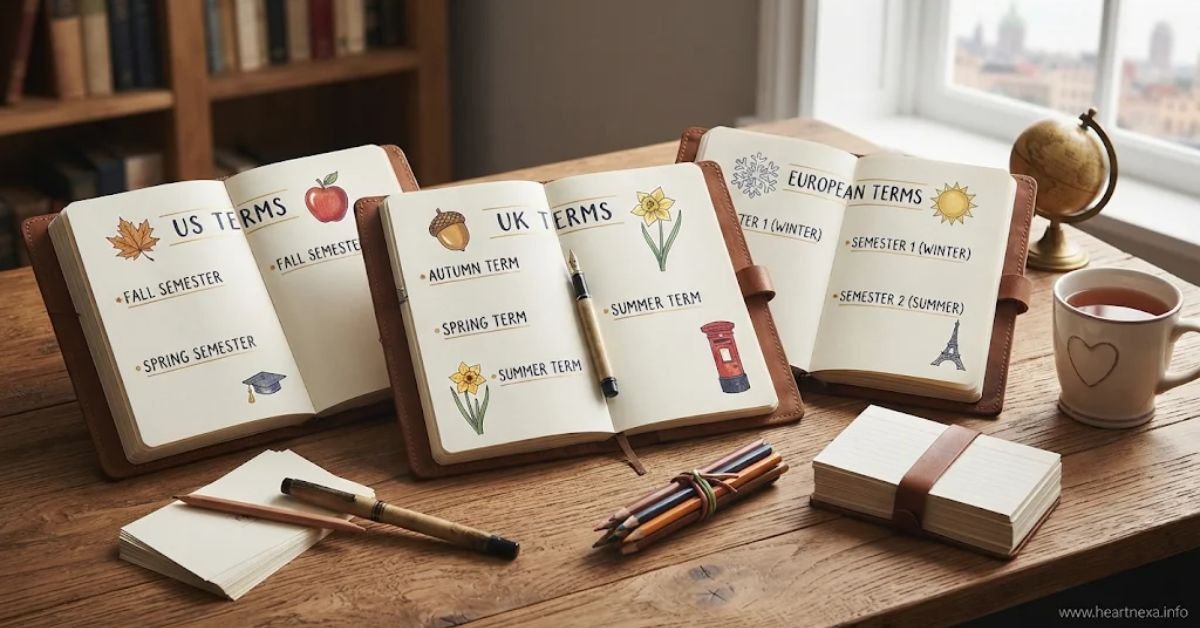
Teachers write for different school systems, and a few terms change meaning across borders. The most common trap is “SATs.” In the US it is a college admissions test taken in the high school years, and in England it is commonly used for the national tests at the end of primary school. A wish that mentions the wrong one will confuse students and parents.
This article uses US spelling by default (for example “favorite” and “grade”). UK readers can swap in “favourite,” “mark” and similar spellings without changing the meaning of any message.
| Situation | United States | United Kingdom | Continental Europe (examples) |
| Everyday school tests | Quiz, unit test | Class test, end-of-unit test | Class test, written test |
| Practice exams | Practice test, midterm | Mock exams (mocks) | Mock or trial exams, where used |
| Main national or state tests | State tests, AP exams | National tests, GCSEs, A-levels | Final secondary exams such as the baccalauréat (France), Abitur (Germany), or maturità (Italy) |
| College or university entry | SAT or ACT, plus applications | UCAS applications, A-level results | Often tied to the final secondary exam |
| Final year of school | Senior year, graduation | Year 11 (age 16) or Year 13 (age 18), leavers’ assembly | Final year of upper secondary |
| School terms | Semesters or quarters | Terms (autumn, spring, summer) | Varies by country |
| How students address teachers | Mr., Ms., Mrs., Dr. | Often Miss or Sir, or Mr., Ms. | Varies by country and language |
A few practical tips when adapting a message:
- Name the real exam. “Good luck on your GCSEs” lands better than “good luck on your exams” when the student’s world is England. The same goes for naming the Abitur or the baccalauréat for students on the continent.
- Match the calendar. In the northern hemisphere, finals and leavers’ events cluster in late spring and early summer. Other countries run on different calendars, so check your school’s dates.
- Mind the sign-off. A teacher in a UK school may be addressed as “Miss” or “Sir.” A note signed with your surname and title usually works anywhere.
If you teach in a country not listed here, the same approach applies: use the local name for the exam or milestone and keep the rest of the wish unchanged.
Beyond Wishes: Parent Notes and Report Card Comments
Teachers rarely stop at the student. The same encouraging tone often needs to reach a parent or fit into a report card. These are separate tasks from writing a wish, so treat this section as a short bridge, not a full guide.
A Simple Structure for a Positive Note Home
A note to a parent can follow the same three questions as a wish. Say what you noticed (specific), what the student did (effort), and what’s next (forward). Keep it to three or four sentences. For example:
“I wanted to share that Maya has been staying after class to finish her lab write-ups. Her explanations are getting clearer each week. Next, we’ll work on organizing her conclusions, and I think she’s ready.”
Mailing notes home can also carry weight. Edutopia contributor John Tiersma described setting aside time each week to write encouraging notes to students, and those notes went home to families, not just to the students themselves.
A Three-Step Plan for Report Card Comments
For students who are struggling, one teacher-resource site suggests a three-step approach: open with something positive, name the area that needs work, and close with a practical next step. Comments written this way keep the focus on what to do next and read as supportive instead of final.
Three examples, written to show the pattern (these are illustrations, not counted in the total above):
- “Sam has become more confident joining class discussions. Reading comprehension is still developing, so practicing with short passages at home would help. I’m confident he can build on this progress.”
- “Priya’s effort in math has been steady all term. Multi-step problems are the next challenge, and working through a few each week should help.”
- “Daniel brings real curiosity to science. Keeping his notes organized will help him study for the next unit.”
Report card comments are a separate search topic with their own conventions, such as school format, character limits and tone. This article does not try to replace a dedicated guide to them.
FAQ’s
What are the best wishes for students from teachers?
The best wishes for students from teachers are short and specific, and they credit effort over talent. They also point toward something the student can do next. A message like “You kept working on that problem even when it was hard. Keep going.” works better than a general “You’re great.” Name one real thing you noticed, and the student will keep the note.
What do you write to a student as a teacher?
Start with one specific thing the student did, add a word of recognition for the effort behind it, and finish with a look forward. Two or three sentences are usually enough. Match the tone to the moment: lighter for a first day, steadier before an exam, warmer after a setback.
What is a good luck message for students before an exam?
A good luck message should point to the student’s preparation and avoid adding pressure. Try something like “You’ve done the work. Now let it show,” or “Do your best, and I’ll be proud either way.” Keep it short, since the student may read it just before walking in. For students who get anxious, add a calming line such as “Feeling nervous means you care.”
What do you say to encourage a struggling student?
Be honest, warm and practical. Acknowledge the difficulty, name something real the student has done, and offer a small next step instead of a big promise. For example: “This grade shows where we start, not where you’ll end up. Let’s look at it together.” Avoid predictions about future levels or scores, because they can feel like a target the student missed.
How do you write an end-of-year message to students?
Keep it short and concrete. Mention one thing you watched the student grow into, thank them for something specific, and look ahead to what comes next. Add a personal line, such as an invitation to visit or write back. Handwritten cards and bookmarks tend to last longer than a class-wide message.
What should teachers not say to students before a test?
Avoid phrases that raise the stakes or compare the student to others. Lines like “I’m sure you’ll ace it,” “Don’t let me down,” or “Everyone finds this easy” can backfire. Praise for being “smart” is also less useful than praise for the work the student put in. Try “You’ve prepared well. Do your best” instead.
What should a teacher write for graduating students?
A graduation note should honor how far the student has come without assuming where they’re heading next. Name a strength you’ve seen, express pride in the effort, and leave the path open. Students heading to college, an apprenticeship, or straight to work can all be wished well in the same note. A short invitation to stay in touch is a warm way to close.
How do you write a note to a student who got disappointing results?
Acknowledge the disappointment first, and avoid rushing to the bright side. Say that the result is one piece of information, not a verdict on the student, and offer to look at options together. A private note or conversation usually works better than a public message. For example: “I’m sorry this isn’t what you hoped for. Your effort was real, and I saw it. Come and talk when you’re ready.”
Conclusion
The best wishes for students from teachers rarely depend on fancy wording. They work because they name something real, credit the effort behind it, and point toward what comes next. A single sentence on a sticky note can do that, and so can a handwritten card at the end of the year.
Pick the message that fits the moment, adjust a word or two, and add one detail only you could have noticed. Whether the student is nervous on the first day, waiting on results, or walking across a graduation stage, a sincere line from you is often the one they carry the longest. Start with one student this week and write them a note.

Creating heartfelt wishes, greetings, and inspiring messages to help you celebrate special moments, spread positivity, and express your feelings beautifully.