
The first message a new parent reads after a birth is usually a short one, and it tends to arrive when they’re running on very little sleep. Good new born baby wishes don’t have to be long. They have to sound like you.
Below are ready-to-send newborn baby wishes for baby boys, baby girls, parents and extended family, written for texts, cards and social posts.
You’ll also find wording for trickier moments, such as a NICU stay, an adoption or twins, plus a simple structure for writing your own.
Pick a line, change a detail or two, and send it while the news is fresh.
Key Takeaways
- Use the 3-Line Newborn Note: welcome the baby, wish something specific, then add one line of warmth or practical help.
- Use the baby’s name if you know it. Parents notice that more than any adjective.
- A quick text in the first day or two suits the moment. A longer card often means more a few weeks later, once the initial attention has faded.
- Leave out parenting advice, comments on the baby’s weight or looks, and questions about a second baby.
- Situations like a NICU stay, an adoption or a loss before this baby need a gentler tone, covered further down.
How to Write Newborn Baby Wishes That Don’t Sound Generic
A good newborn message does three things: it congratulates the parents, welcomes the baby, and adds one detail only you could write. That detail is what separates heartfelt newborn baby messages from the copy-paste ones parents receive dozens of times that week.
The 3-Line Newborn Note
The 3-Line Newborn Note is a simple structure for any congratulations wishes for a new baby, whether it’s a text or a handwritten card. Each line has a job:
| Line | Its job | Ways to start it |
| 1. Welcome | Greet the baby and congratulate the parents | “Welcome to the world, [name]!” / “Congratulations, [parent names].” / “He’s here, and we couldn’t be happier.” |
| 2. Wish | Say one specific hope for the baby or the family | “May your first year be full of slow mornings and long cuddles.” / “Wishing her a life as curious as she already looks.” |
| 3. Warmth | Close with care or a small offer of help | “No need to reply, just know we’re thinking of you.” / “I’m dropping off dinner on Thursday. Tell me what you’re allergic to.” |
Here is how the three lines combine in practice:
- “Welcome to the world, Amelia! May your first year be full of soft blankets and unhurried cuddles. We’re bringing dinner this week, so just tell us which night.”
- “Congratulations, Sam and Priya. Little Arjun is lucky to arrive in a home with this much love. Thinking of all three of you.”
- “He’s here! Wishing Theo a lifetime of curiosity, and you both a few unbroken hours of sleep. No need to reply, we’re just cheering from afar.”
- “Welcome, little Noor. May your life be as gentle as your first day. Sending love to all three of you.”
- “Congratulations on your daughter, Elena. Seeing you become a mother has been a joy to watch. Call me whenever you want company.”
A few habits make these land better:
- Write to both parents. If you only know one, still say “to you both” or “to your family.”
- Use one concrete detail. “Born on the first snow of the year” does more work than three adjectives.
- Keep the third line optional. An offer of help only counts if you mean it. A specific one (“I’ll bring lunch Friday”) beats “let me know if you need anything.”
- Trim for texts. In a message app, lines one and three alone are enough.
Choosing Tone by Relationship
The same words can feel warm from a sister and awkward from a manager. Use this table as a quick guide before you choose from the sections below.
| You are the… | Best tone | Length | Sample opener |
| Close friend | Warm, personal, a little humour if they like it | 2–4 sentences | “I’m crying happy tears over here. Welcome, little one.” |
| Sibling | Affectionate, memory-based | 3–5 sentences | “I still can’t believe you’re someone’s mom/dad.” |
| Grandparent | Heartfelt, forward-looking | 3–5 sentences | “You made me a grandparent, and I am overjoyed.” |
| Aunt or uncle | Playful and loving | 2–4 sentences | “Your new favourite relative has officially arrived.” |
| Coworker | Friendly, light, no personal advice | 1–3 sentences | “Congratulations to you and your family. Enjoy every minute.” |
| Boss or client | Polite and brief | 1–2 sentences | “Warmest congratulations to you and your family.” |
| Neighbour | Kind and practical | 2–3 sentences | “So happy for you. Happy to water plants or walk the dog.” |
| Distant relative or acquaintance | Simple and sincere | 1–2 sentences | “Congratulations on your beautiful new arrival.” |
When you’re unsure, warm and short beats funny and long. Save jokes about sleep or diapers for people who share your sense of humour, and keep them away from anyone who had a difficult birth or a long hospital stay. If you don’t know the full story, a plain, sincere message is the safer choice.
New Born Baby Wishes for Parents
The baby gets the attention in the first week, but the parents are the ones doing the work. These new born baby wishes speak to them directly, whether you’re writing to a first-time mum, a new dad or both at once. Each one is meant to be sent as written or changed with a name and a detail.
- “Congratulations, [names]. Your family just got bigger, and the world just got a little kinder.”
- “You two have been waiting for this day, and I’m so happy it’s finally here. Welcome to parenthood.”
- “Watching you become a mother has been one of the great joys of knowing you. [Baby’s name] is very lucky.”
- “Dad, congratulations. I can already picture you pacing the hallway at 3 a.m. with a tiny person on your shoulder. You’re going to be wonderful at this.”
- “No one is ready for this, and everyone figures it out anyway. You’ll figure it out too. We’re proud of you both.”
- “May you trust your instincts more than any advice you’re given, including ours.”
- “Wishing you slow mornings, soft laundry and a few stretches of real sleep. Congratulations on your beautiful baby.”
- “You waited and hoped for this baby for a long time. Seeing you hold [name] feels like the happiest ending. All our love.”
- “Congratulations on the safe arrival of your little one. Rest up, you’ve earned it.”
- “Your home has a new heartbeat in it. May it be filled with laughter, mess and a great deal of love.”
- “Parenthood looks good on you both. Wishing you all the patience you need and all the joy you deserve.”
- “Today you became someone’s whole world. Congratulations, and thank you for letting us share it with you.”
- “Take it one feed, one nap and one day at a time. We’re only a message away if you want company or a hot meal.”
- “Welcome to the best and most exhausting adventure there is. Congratulations to the two best people to take it on.”
If you’re writing to someone who’s just had a baby, keep the message about them as well as the baby. A line like #3 or #12 tells the parent you see how big this change is for them. Messages for the weeks after, when the visitors thin out, are in the check-in section later in this article.
Newborn Baby Boy Wishes

A new son is a good reason for a warm message, and the best newborn baby boy wishes mention the baby as a person rather than leaning on clichés about blue and sports. These lines welcome him, wish him well and speak to the parents who are now raising him. If you know his name, drop it in. It makes any of these feel written for him.
- “Welcome to the world, [name]. You’ve got a family waiting to love you and two parents who’ve been dreaming of you.”
- “Congratulations on your baby boy! May he grow up as kind as the two people who are about to raise him.”
- “A son is a joy that keeps growing. Wishing your family every happiness with your little guy.”
- “Little [name] has arrived, and the room feels warmer already. Congratulations to you all.”
- “Wishing your baby boy a childhood full of muddy knees, big questions and bedtime stories.”
- “May he be curious, may he be gentle, and may he always know how wanted he was from day one.”
- “Congratulations on your new son. We can’t wait to meet him and see which of you he looks like.”
- “Your baby boy is lucky to be born into a family this loving. We’re so happy for you.”
- “Boys grow fast, so hold him close while he’s tiny. Congratulations to the proud parents.”
- “Welcome, little man. You have a lot of people ready to cheer you on, starting with those who love you most.”
- “Wishing your son good health, good friends and a lifetime of reasons to smile. Congratulations on your handsome boy.”
- “Congratulations, [mum’s name] and [dad’s name]. Watching you hold your son made our whole week.”
- “May your baby boy bring you endless giggles and fewer sleepless nights than you’re expecting. Warmest congratulations.”
- “We’ll be the first to babysit when you need a night out. Congratulations on your little prince, and welcome to the family, [name].”
A note on wording: “little prince” and “little man” are common, but not every family likes them. If you don’t know the parents’ taste, use the baby’s name or “your son” instead.
Newborn Baby Girl Wishes
Messages for a new daughter often fall back on pink, princesses and “she’ll break hearts.” Parents tend to appreciate wishes about who she might become more than what she’ll wear. The newborn baby girl wishes below welcome her, wish her something real and acknowledge the people raising her.
- “Welcome to the world, [name]. We’ve been waiting to meet you, and you’re even more wonderful than we imagined.”
- “Congratulations on your baby girl! May she grow up knowing she is loved exactly as she is.”
- “A daughter changes a family in the best way. Wishing you all the joy that comes with your little girl.”
- “Little [name] has arrived, and the whole day feels softer. Congratulations to all of you.”
- “May she be brave, may she be curious, and may she always have a home to come back to. Congratulations, [names].”
- “Wishing your baby girl a life of big ideas, loud laughter and people who cheer for her. We’re so happy for you both.”
- “Congratulations on your new daughter. She has already made two people very proud.”
- “I can’t wait to hear her first giggle. Welcome, [name], and congratulations to her wonderful parents.”
- “Your baby girl is lucky to have a mum and dad who’ve wanted her so much. Sending love to your whole family.”
- “May your daughter grow up with a loud voice and a kind heart. Warmest congratulations.”
- “Hold her close while she’s small and let her run when she’s not. Congratulations on your beautiful girl.”
- “Welcome, little one. The world has been waiting for someone just like you.”
- “Wishing [name] a childhood of scraped knees, bedtime stories and endless cuddles. Congratulations to her parents.”
- “She’s already surrounded by love, and she’s only a day old. Congratulations on your baby girl, and welcome to the family.”
Phrases like “little princess” are widely used, but some parents prefer wishes that don’t lean on them. If you don’t know the family’s taste, use her name or “your daughter.”
Gender-Neutral Wishes and Messages Written to the Baby
Plenty of parents keep the baby’s sex private, use a different word for it, or simply don’t want a message built around it. Others never find out before the birth. Gender-neutral newborn messages also suit adoption cards and mixed groups, and they work if you’re unsure of the details.
Some of these are written directly to the baby. A card addressed to “Dear [name]” or “Dear little one” becomes a keepsake the child may read years later. If you write one, add a line for the parents too, so they feel included.
- “Congratulations on your new arrival. May your family be filled with love, laughter and plenty of cuddles.”
- “Welcome to the world, little one. You’ve made two people very happy and a lot of other people curious about your name.”
- “A new baby is a new story. We can’t wait to see how yours unfolds. Congratulations, [names].”
- “Wishing you all the joy of getting to know a brand new person. Congratulations on your baby.”
- “Dear [name], you arrived on a day your parents had been dreaming about for a long time. Welcome. You are so loved.”
- “Dear little one, you won’t remember this card, but we hope you’ll know how much we celebrated your arrival.”
- “Welcome to the world, [name]. Your family has been waiting a long time to meet you, and we’re all so glad you’re here.”
- “May your first days at home be calm, may your nights be quiet and may your parents get at least a nap. Congratulations.”
- “Dear [name], your parents are going to love you in ways they haven’t found words for yet. Welcome to a very lucky family.”
- “To the new parents: congratulations on your baby. To the baby: welcome. Your people are already cheering for you.”
A tip for gender-neutral cards: use the baby’s name, “your baby” or “your little one” and skip pronouns until the parents use them. That way you never guess wrong.
Short Newborn Baby Wishes for Texts and WhatsApp

A new parent checking their phone from a hospital bed or a sofa at 4 a.m. doesn’t need a paragraph. A line or two is enough, and it often means more because it’s easy to take in. These short newborn baby wishes fit a text, a WhatsApp message or a comment under the birth announcement. Add the baby’s name where there’s a space for it.
- “Welcome to the world, [name]! Congratulations to you both.”
- “He’s here! So happy for you all. Rest up.”
- “She’s here! Sending you all so much love.”
- “Congratulations, new mum and dad. [Name] is perfect.”
- “Cheering for you from [city]. Congratulations on your baby!”
- “Huge congratulations. Can’t wait to meet [name].”
- “Welcome, little one. Your family is already smitten.”
- “Love to all three of you. No need to reply, just rest.”
- “You did it! Congratulations, and welcome to the world, [name].”
- “So much joy for your family today. Congratulations.”
- “What wonderful news. Warmest congratulations to you all.”
- “Welcome [name]. Already loved by so many.”
Two small habits help in a messaging app. If you’re not sure whether to call or text, text first, since a call can wake a baby or a parent who finally dozed off. And “no need to reply” in your message takes pressure off someone who is already behind on replies.
Funny New Baby Wishes for Sleep-Deprived Parents
Humour works best when you know the parents share it and the birth went smoothly. Most of these jokes are about the same few things: sleep, nappies, and how little control anyone has over a newborn. If the delivery was hard or the baby spent time in hospital, choose a warm message from another section instead.
- “Congratulations on your new boss. She doesn’t pay anything, works odd hours and has already taken over the house.”
- “Welcome to parenthood, where a full night’s sleep is a fond memory and a clean shirt is a win.”
- “Congratulations! You’ve made a tiny human who will soon have opinions about everything, including your cooking.”
- “Enjoy the first few weeks. Soon your biggest worry will be where all the tiny socks keep going.”
- “Your life just got louder, messier and a lot more wonderful. Congratulations.”
- “May your coffee stay hot, your baby stay sleepy and your phone stay quiet. Warmest congratulations.”
- “Congratulations on your new arrival. We’re sure you’ll be calm, collected and fully rested at all times.”
- “I hope you remember what sleeping felt like. Welcome to the baby club, and congratulations.”
- “Your baby has the best parents in the world and the worst sense of timing. Congratulations on your beautiful new arrival.”
- “You now have a baby who weighs nothing and somehow controls everything. Congratulations to you both.”
- “Congratulations! You’ve officially entered the era of lullabies, laundry and learning to function on three hours of sleep.”
- “Nappy changes are about to become your new hobby. Congratulations, and may you win more than you lose.”
One reminder for funny messages: parents are tired and sometimes emotional, so a joke that mocks them can land badly. Jokes about the situation, like the sleep or the washing, tend to work better than jokes about the parents’ ability.
Newborn Baby Wishes from Family
Messages from family carry more history than most. A grandparent is welcoming a new generation, an aunt is meeting a niece or nephew, and a spouse is writing to the person who has just done the hardest work of their life. These wishes are written to reflect that. Keep one personal detail in each one, such as a memory, a family name or a promise, and it will feel like it came from you.
From Grandparents
Grandparents often write twice: once to the parents, and once to the grandchild. The first set speaks to your son or daughter, and the second welcomes the baby directly. If you want to say how proud you are of your child, a message to the parents is the place for it.
To the new parents (your child and their partner):
- “I held you on the day you were born, and now I get to hold your child. I have never been prouder of you.”
- “Becoming a grandparent is a joy I couldn’t describe until today. Thank you both for this gift.”
- “You are going to be wonderful parents. I’ve watched you grow into people with so much love to give.”
- “Welcome to the hardest and best job in the world. Ask me anything, or don’t. I’ll be here either way.”
- “Congratulations to you both. Our family has a new member, and our hearts are a little bigger tonight.”
To the grandchild:
- “Dear [name], welcome to the world. Your grandparents have been waiting for you, and we already love you more than you know.”
- “Little one, you have a family full of people who will tell you stories, bake you things and spoil you rotten. Welcome.”
- “Dear [name], I hope to teach you what my own grandparent taught me: that you’re loved no matter what.”
- “To our newest grandchild: you arrived exactly when our family needed you. We’re so happy you’re here.”
- “Welcome, [name]. Your grandma/grandpa is already planning the adventures we’ll have together.”
From Aunts and Uncles
Aunts and uncles get to be the fun relatives, and a newborn message is a chance to promise it. A light, affectionate tone suits you, with a touch of sentiment for the parent, who is probably your sibling.
- “Congratulations, sis. I’m so proud of you, and I fully intend to be the cool aunt.”
- “Welcome to the world, [name]. You’ve just gained an uncle who will teach you every bad joke he knows.”
- “Congratulations, brother. Seeing you as a dad is one of my favourite things that’s ever happened.”
- “[Name], your aunt is here for hugs, bedtime stories and secret snacks. Welcome to the family.”
- “I can’t wait to babysit, spoil and eventually embarrass my brand-new niece/nephew. Congratulations to you both.”
- “Congratulations on your baby. The family just got a lot more fun, and I’m taking full credit for being the favourite uncle.”
Between Husband and Wife
These are messages from one partner to the other, written in the first hours or days after birth. They carry a lot of feeling, so keep them honest and specific. A card tucked into a hospital bag, a note left on the nightstand or a message sent from the waiting room can all hold them. If you are the parent who gave birth, they can be rephrased in reverse.
From a husband to his wife:
- “You were incredible. I’ve never seen anyone so strong, and I’ve never loved you more. Thank you for our daughter/son.”
- “I’m holding our baby and I’m looking at you, and I can’t believe how lucky I am. Thank you for everything.”
- “I know you’re tired and sore. Let me take the night shift. You’ve done the hardest part, and I’ll be here for the rest.”
- “We’re a family now. Whatever comes next, we do it together.”
From a wife to her husband:
- “Watching you hold our baby is the best thing I’ve ever seen. I love you, Dad.”
- “Thank you for staying by my side through all of it. I couldn’t have done it without you.”
- “You’re going to be such a good father, and I already know it. Welcome to the family, our little one.”
- “We’ve waited a long time for this, and it was worth every day. Congratulations, my love.”
If you’re writing as a parent who didn’t give birth, avoid making the message only about the baby. One sentence acknowledging what your partner went through lands harder than five about how cute the newborn is.
Newborn Baby Wishes from Friends, Coworkers, and Neighbours
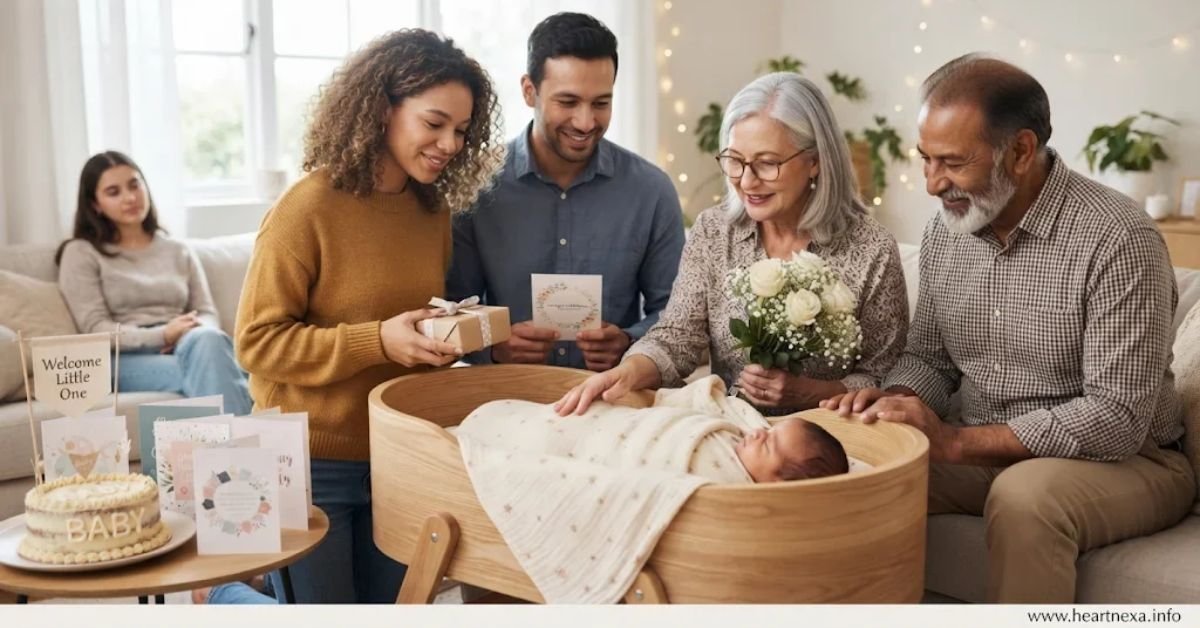
Outside the family, the right message depends on how close you are. A best friend can be emotional and a little silly, a coworker should be warm and brief, and a neighbour is often best remembered for a practical offer. The wishes below are grouped that way so you can match the message to the relationship.
From close friends
- “I’m sitting here grinning at my phone like an idiot. Welcome to the world, [name], and congratulations to my two favourite people.”
- “Of everyone I know, you two were made for this. Congratulations, and I can’t wait for the first cuddle.”
- “I’ll be the friend who brings snacks, asks nothing and holds the baby while you shower. Congratulations on your little one.”
- “You’ve been my person for years, and now you’re someone else’s whole world too. I’m so happy for you.”
From coworkers
A workplace message should be friendly and short. Skip comments on how the parent is coping or when they’ll return to work, which can feel like pressure.
- “Congratulations to you and your family on your new arrival. Enjoy every moment, and we’ll see you when you’re ready.”
- “Warmest wishes on the birth of your baby. The whole team is thinking of you.”
- “Everyone here is so happy for you. Take all the time you need, and welcome to the world, little one.”
From a boss or client
- “Congratulations on the arrival of your baby. Wishing you and your family every happiness.”
- “Warm congratulations from all of us. We hope you’re enjoying these first precious days.”
From neighbours
If you only know the family by sight, a note through the door or a message on the street chat is plenty. A small practical offer is often what they remember.
- “Congratulations on your new baby! If you ever need a hand with the dog, the bins or a coffee run, we’re next door.”
- “Welcome to the street, little one. Congratulations to you both, and please shout if you need anything.”
- “We saw the balloons and had to say congratulations. Thinking of you all, and no need to reply.”
For coworkers, one more point: a group card or a shared message is often kinder than a string of individual ones, since the parent has fewer replies to manage.
Wishes for a Second Baby, Twins, and Big Siblings
A second baby doesn’t get a fraction of the attention a first one does, but the parents are in a different place. They know what the night feeds feel like and they’re now managing a toddler as well. Twins double the joy and the workload. These messages acknowledge that, without comparing the baby to the one before.
Second or Third Baby
Experienced parents don’t need advice. They like to hear that the family feels complete, or that the older child is going to be a good sibling. Avoid “so, is that the last one?” and anything that sounds like a count.
- “Congratulations on baby number two! You already know how to do this, and your family is about to get even louder and lovelier.”
- “Your family just grew again, and so did your hearts. Welcome to the world, [name].”
- “[Older child’s name] is going to be the best big brother/sister. Congratulations to all four of you.”
- “You’ve done this before, and you’ll do it beautifully again. Wishing you plenty of patience and a few spare hands.”
- “Welcome, little [name]. You’ve joined a family that already knows how to love a baby.”
Twins
For twins, name both babies if you can. Writing “your babies” is fine, but names make it personal. Avoid jokes that imply the parents can’t cope, and avoid asking whether twins run in the family.
- “Two babies, double the love. Congratulations on the arrival of [name] and [name].”
- “You’ve been blessed twice over. Wishing you strength, snacks and sleep, and a lot of joy as your twins grow.”
- “Congratulations on your twins! We can’t wait to meet both of them, and we’re ready to help however we can.”
- “Two tiny miracles in one family. Welcome to the world, [name] and [name]. You two are very loved.”
Big Brother or Big Sister
If you’re writing to an older sibling, or a card is going to be shared with them, a line that makes them feel included goes a long way. Big siblings can feel pushed aside in the first weeks, so a message that is partly for them is thoughtful.
- “Dear [name], you’re a big brother/sister now. That’s a very important job, and we know you’ll be great at it.”
- “Congratulations on your new baby sister/brother, [name]. They’re lucky to have someone like you to look up to.”
- “To the newest big sibling: your baby is going to learn everything from you. Thank you for being such a good example.”
- “Welcome to the world, [name]. [Older child’s name] has been waiting for you, and you now have a built-in best friend.”
If the older child is young, ask a parent to read the card to them. A message that names the child and gives them a task, like “you can help pick the first bedtime story,” tends to be more welcome than one that only says congratulations.
Wishes for Tender Situations
Some births come with a bigger story: a frightening start, a loss before this baby, or years of waiting. Parents in these situations often get the same stock congratulations as everyone else, and a few of those phrases can sting. The messages below are written to celebrate the baby without making assumptions about what the parents have been through.
A general rule helps here. Follow the parents’ lead on language, don’t ask for details they haven’t offered, and keep the message about the family rather than the circumstances.
After a NICU Stay or Premature Birth
A baby in intensive care leaves the parents tired, anxious and often unable to celebrate openly yet. Congratulate them, but don’t tell them everything will be fine, and don’t call the baby tiny in a tone that suggests worry. A quiet offer of practical help is often welcome.
- “Congratulations on your baby. We’re thinking of all three of you, and we’re here for whatever you need, whenever you need it.”
- “Welcome to the world, [name]. You’ve got a whole crowd of people cheering for you, and for your parents.”
- “Sending so much love to your family. No need to reply. We’re just holding you close from afar.”
- “Congratulations, [names]. [Name] is so lucky to have you in their corner. Let us know if we can bring a meal or run an errand.”
Avoid “at least you’re past the hard part”, “everything happens for a reason” and questions about the baby’s health or weight. If the parents share updates, respond to what they say.
A Rainbow Baby After Loss
A rainbow baby is a baby born after a miscarriage, stillbirth or infant loss. Some parents are happy to use that word, and others feel it doesn’t fit. Don’t use it unless they do. This is a joyful moment, and it can also bring grief back, so a message that holds both is often kindest.
- “Congratulations on your baby. We’re so happy for you, and we’re thinking of you through every part of this.”
- “Welcome to the world, [name]. You are so wanted, and so loved.”
- “So much joy for your family today. Thinking of you all, and here whenever you want to talk or sit quietly.”
- “Congratulations, [names]. Your family has been through so much, and I’m glad to see this joy find you.”
Don’t say that this baby “makes up for” the earlier loss, and don’t mention the past unless they do. If you shared the earlier loss with them, a gentle acknowledgement is fine, but let them lead.
Adoption and Surrogacy
Adoptive parents and parents who used a surrogate want the same recognition as anyone else: they’re parents now. Use “your daughter” or “your son”, not “adopted baby” or “their real parents.” Don’t ask about the birth family or how the arrangement worked.
- “Congratulations on becoming parents. [Name] has joined a family that wanted them so much. We’re so happy for you.”
- “Welcome home, [name]. You are loved beyond measure, and your family can’t wait to start this chapter with you.”
- “Congratulations to you both on the arrival of your baby. Parenthood looks wonderful on you.”
- “What a joy to welcome [name] into your family. Thank you for letting us be part of this day.”
For adoption specifically, many families have a “gotcha day” or arrival day they treat as the baby’s real beginning. A message that says “welcome home” rather than “congratulations on the birth” can feel particularly warm.
After a Long Wait or IVF
Parents who waited years, or went through fertility treatment, may be very emotional now. Avoid anything that implies their wait was a mistake or that it only happened because they relaxed. Simply say how glad you are.
- “You waited so long and hoped so hard. I’m overjoyed that [name] is finally here. Congratulations.”
- “This baby was worth every day of waiting. Congratulations on your beautiful arrival.”
- “Welcome, [name]. Your parents have loved you since long before you were born. We’re so happy for all three of you.”
Don’t ask whether it was IVF, whether they tried naturally or when they “gave up.” If they want to share the story, they will.
Single Parents and Same-Sex Couples
Both groups get a lot of well-meaning but clumsy messages, usually built around “mum and dad” or “both parents.” Address the family as it is. If you don’t know how the parents describe themselves, say “your family” or use their names.
- “Congratulations on your baby. [Name] has a wonderful parent who is going to give them the world.”
- “You’ve got this, and you’ve got us. Welcome to the world, [name].”
- “Congratulations to you both on your baby. Two moms/two dads and one very lucky little one.”
- “Welcome to the world, [name]. You’ve joined a family that’s full of love and ready for you.”
Don’t ask who the “real” or “biological” parent is, and don’t say anything that suggests the baby is missing a parent. In every case, the baby’s parents are the people who are raising them.
Religious and Cultural Blessings for a Newborn

For many families the birth is also a spiritual or cultural moment, and a message that recognises it can mean a great deal. The risk is guessing wrong, because a family’s name or background doesn’t tell you what they believe or celebrate. Use these only when you know the family would welcome them. If you’re unsure, a warm general message from earlier in this article is the safer choice.
Traditions also vary within each faith and culture. The wishes below reflect widely used wording, so follow the family’s own customs if you know them.
Christian Blessings
Christian families may mark a birth with a baptism, a christening or a baby dedication, depending on their denomination. A card can mention any of these without needing to name one. Psalm 127:3 is a common reference in congratulations messages, because it describes children as a heritage from the Lord and the fruit of the womb as a reward. Another favourite is the priestly blessing in Numbers 6:24–26, which begins “The LORD bless thee, and keep thee” in the King James Version.
- “May God bless your little one and keep [name] safe in His care. Congratulations on this gift.”
- “Children are a gift from God, and [name] is a wonderful one. We’re giving thanks with you today.”
- “Praying that [name] grows in wisdom, in kindness and in the knowledge of how deeply they’re loved by God and by you.”
- “We’re thanking God for the safe arrival of your baby, and asking Him to give you strength, patience and joy in the days ahead.”
- “The Lord bless you and keep you, and your sweet baby too. Congratulations.”
Islamic Duas and Wishes
In Islam, congratulating parents on a birth is encouraged, and there is a well-known dua for it. It is transliterated as “Baarakallaahu laka fil-mawhoobi laka, wa shakartal-waahiba, wa balagha ‘ashuddahu, wa ruziqta birrahu.” In plain English, it asks that Allah bless the parents in what they’ve been given, that they be grateful to the Giver, that the child reach maturity, and that the child be dutiful to them.
For a girl, the wording is adjusted, for example “Barakallahu laki/laka fiha wa ja’alaha barratan taqiyyatan.” A commonly given reply from the parents is “Baarakallahu laka wa baaraka ‘alayka, wa jazaakallaahu khayran, wa razaqakallaahu mithlahu, wa ‘ajzala thawaabaka,” which prays for blessings, reward and goodness for the person who congratulated them.
Scholars and Q&A sources differ on which wordings are best attested, so a sincere dua in your own words is also fine. IslamQA, for instance, says there is nothing wrong with a simple dua such as asking Allah to make the baby righteous and kind to her parents.
- “May Allah bless you in the gift He has given you, and make your baby a source of joy and goodness.”
- “Congratulations on your new arrival. May Allah make [name] righteous, healthy and a comfort to you.”
- “Alhamdulillah for the safe arrival of your baby. May Allah protect them and fill your home with barakah.”
- “May Allah make your daughter kind-hearted and devout, and make her a blessing to your whole family.”
- “May Allah give you the strength to raise [name] with love, and may they grow up with a good name and a good heart.”
Many Muslim families also hold an aqiqah and choose a name in the first days or weeks after birth. If you’re invited, a dua like #151 or #152 is a natural message to bring.
Jewish Blessings
“Mazel tov” is the traditional greeting, and it’s customary to say it to the baby’s parents, grandparents and other relatives at a baby naming. A boy’s brit milah is traditionally held on the eighth day of life, while naming ceremonies for girls can happen at any time, usually in the first few weeks.
The best-known blessing for a newborn is the wish that, just as the baby has entered the covenant, so may they enter Torah, the marital canopy and good deeds. Practices and wording differ between Orthodox, Conservative, Reform and other communities, so keep it simple unless you know the family’s tradition.
- “Mazel tov! Wishing you and [name] a life full of joy, health and peace.”
- “Mazel tov on the birth of your son/daughter. May [name] grow up surrounded by love, learning and kindness.”
- “Mazel tov to the whole family. May [name] grow to a life of Torah, love and good deeds, and may you have much nachas.”
“Nachas” means the pride and joy parents feel in their children, and it’s a warm word to use if the family does.
Chinese Full-Month Wishes
In Chinese culture, the completion of the baby’s first 30 days is marked as “man yue” (满月), the full month. The classic celebration is the red egg and ginger party, where red eggs symbolise life, happiness and protection. Today, it’s also common to hold the celebration on the baby’s 100th day, so don’t assume which date the family has chosen. Guests often bring gifts of gold jewellery or cash in red packets.
You can write in English, Chinese or both. If you’re sending a Chinese phrase, check the wording with a native speaker or the family if you’re not fluent.
- “恭喜你们喜得千金! (Gōngxǐ nǐmen xǐ dé qiānjīn.) Congratulations on your baby girl. Wishing her health and happiness.”
- “恭喜你们喜得贵子! (Gōngxǐ nǐmen xǐ dé guìzǐ.) Congratulations on your baby boy. Wishing him a bright and happy life.”
- “满月快乐! (Mǎnyuè kuàilè.) Happy full month to [name]. May they grow up healthy, happy and loved.”
Other traditions have their own welcome rituals, including Hindu naming ceremonies, Sikh naming at the gurdwara and the Malay full-moon celebration. If you know the family follows one, ask what greeting they’d prefer rather than guessing.
When to Send Your Message and Which Channel to Use
A kind message can still land badly if it arrives at the wrong time or in the wrong place. Parents of a newborn are tired, often running on adrenaline and unpredictable naps, and they may be sorting through dozens of notifications. Matching the message to the moment makes it easier for them to enjoy it.
Use this as a quick guide. The timings are practical suggestions rather than fixed rules, so adjust them to the family.
| When | What suits the moment | Why it works |
| First 24–48 hours | A short text or WhatsApp message (see the short wishes earlier), ideally ending with “no need to reply” | Parents get the news that you care without having to answer. Avoid calling, since a call can wake the baby or a resting parent. |
| Hospital stay | A text, not a visit, unless the parents have invited you | Many parents want a few quiet days before welcoming visitors. Ask before you come. |
| First two weeks | A handwritten card or a longer message that uses the 3-Line Newborn Note | The first rush of messages has passed, and a card gives them something to keep. |
| Weeks three to six | A check-in message (covered later in this article) | Visitors thin out around now, and this is often when parents feel most alone. |
| Much later | A card with a warm opener and no long apology | A late message still says you were thinking of them. One etiquette guide suggests that sending a late new baby card is still appropriate, and better than sending none, even months after the birth. |
If you missed the window completely, start with something simple like “I’ve been thinking about you both and I’m sorry I’m late. Congratulations on [name].” Parents rarely keep score, and a sincere note outweighs a well-timed generic one.
If you’re writing across time zones, send your message so it arrives in daylight where they are. A text that lands at 3 a.m. can be lovely if they’re awake feeding the baby, or unwelcome if they’ve just fallen asleep.
Choosing the right channel
Each channel has its own norms, so match the format to your closeness to the family and to what the parents are likely to read.
| Channel | Best for | Watch out for |
| Text or WhatsApp | Close friends, family, neighbours | Keep it short and don’t expect a quick reply. |
| Voice note | Grandparents, siblings and best friends who want to be heard | Only send if they enjoy voice notes, since some parents can’t listen with a baby in their arms. |
| Handwritten card | Family, close friends, colleagues you know well | Address it to both parents and, if you know it, the baby’s name. |
| Group card or e-card | Workplaces, clubs, large friend groups | A single shared message can spare parents a long list of replies. |
| Social media comment | Acquaintances, wider circles | Keep it brief, and don’t share the baby’s photo, name or birth details until the parents have posted them. |
| Colleagues, bosses, clients | Keep it short and polite, and don’t mention work deadlines. |
One habit is worth adopting everywhere: send one good message rather than several. A stream of follow-up texts (“Did you get my message?”) adds to the pile of things a new parent feels they have to answer.
What Not to Say to New Parents (and What to Say Instead)
Most people who say the wrong thing to new parents mean well. The trouble is that tired, emotional parents hear remarks about sleep, feeding or their baby’s appearance as judgement. A few phrases come up again and again, so it helps to have a replacement ready.
Advice is the most common trap. Even a casual suggestion about diet, sleep or feeding can feel like criticism. One news piece on things not to say to new moms includes unsolicited tips like cutting out dairy. A card guide also recommends skipping clichés like “sleep when the baby sleeps” and questions such as “so when’s baby #2?”.
| Instead of this… | Why it can sting | Try this |
| “Sleep while the baby sleeps.” | It ignores everything else a new parent needs to do, and it’s a cliché they hear constantly. | “Rest whenever you can. I’ll handle dinner Thursday.” |
| “So, when’s the next one?” | It treats the baby as a stepping stone, and the parents may not want more children, or may have struggled to have this one. | “Congratulations on [name]. I’m so happy for the three of you.” |
| “He/she looks just like [relative]!” | Parents may not want a resemblance pointed out, especially in adoption or surrogacy. | “What a beautiful baby.” |
| “Is she a good baby?” | It sets a standard that the parents may feel they’re failing. | “How are you all doing?” |
| “You look exhausted!” | New parents already know, and it can land as criticism. | “You’re doing an amazing job.” |
| “Are you breastfeeding?” or “You should try…” | Feeding is a personal and often stressful topic, and the question assumes they want to discuss it. | “Let me know if you want company or a meal.” |
| “At least the baby is healthy.” | It can shrink a parent’s difficult birth or recovery. | “I’m so glad you’re both safe. How are you feeling?” |
| “What did you name him?” with a reaction to the answer | Comments on names, good or bad, are rarely welcome. | “[Name] is a lovely name.” |
| “Let me know if you need anything.” | It puts the work on the parents to ask. | “I’m bringing lunch Friday. Is noon okay?” |
| Comments on weight, size or “being so tiny” | Many newborns are watched closely by doctors, and the remark can raise worry. | “He/she is perfect.” |
A good test before you send: would this message make the parents feel more capable, or less? If a line gives them something to be proud of, it’s safe to send. If it asks them to explain or defend a choice, leave it out.
If you do want to help, be specific. “I’ll walk your dog Tuesday” or “I’m dropping off soup, no need to answer the door” lets parents say yes without having to think of a task. Messages that follow the 3-Line Newborn Note, with a short wish and a practical offer, tend to avoid every mistake in the table above.
Check-In Messages for New Parents Weeks Later
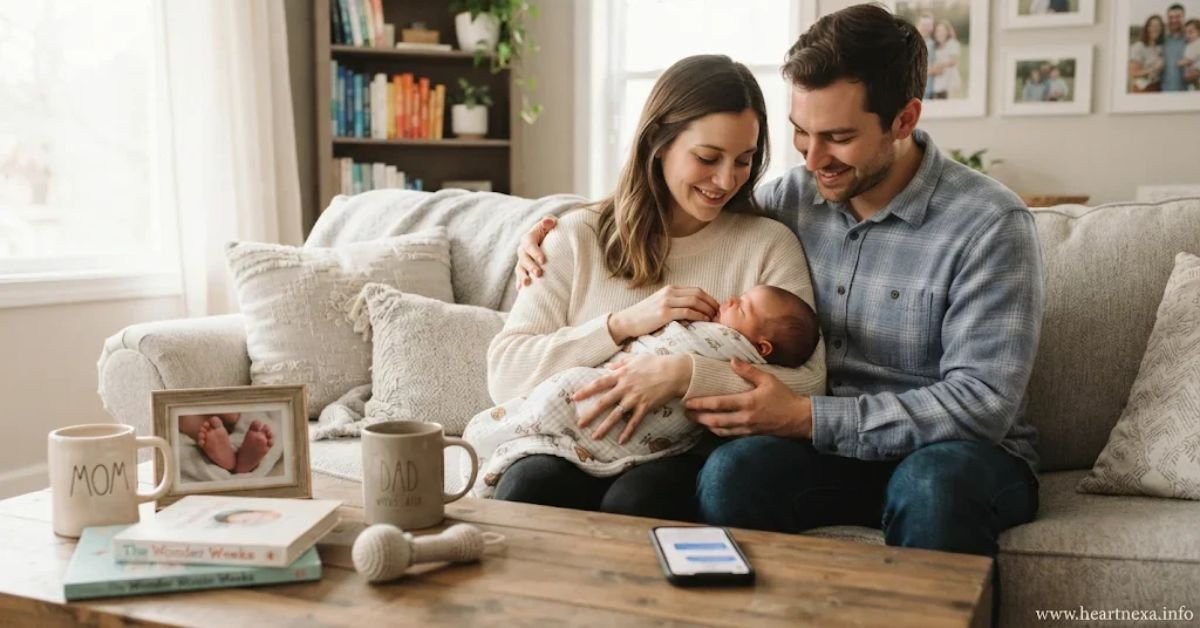
The first wave of congratulations arrives within days. By week three or four, the visitors and the messages thin out, and the exhaustion is still there. A short, low-pressure message at that point can mean more than anything sent on the birth day.
Good check-ins share two traits. They ask for nothing, and they offer something specific. The messages below are written for friends, family and neighbours who want to support the parents without adding to their to-do list.
- “No need to reply. Just thinking of you both and wondering how the days are going. I’m here if you want a chat or some company.”
- “I’m dropping soup on your porch Thursday around six. Leave a cooler out and don’t answer the door.”
- “How are you really doing? Not the baby, you. I’d love to hear, whenever you have a minute.”
- “I know the visitors have thinned out by now. If you’d like company, or a quiet hour to nap while I hold [name], just say the word.”
- “You’re doing a better job than you think. I’m cheering for you both.”
- “I’m heading to the shops. Send me a list, even a messy one, and I’ll leave the bags at your door.”
- “Can I walk the dog, take [older child] to the park or do a load of laundry on Saturday? Pick whichever sounds best.”
- “I’m awake at 3 a.m. most nights these days. If you’re up feeding and want someone to text, I’m here.”
Message #168 is only worth sending if you really will be awake. An offer you don’t follow through on is worse than none.
When tiredness looks like something more
Most new parents are exhausted and emotional, and that is normal. One Singapore parenting resource notes that parenthood can feel emotional and draining in the newborn phase, and that “baby blues” after childbirth are common. If a friend seems to be withdrawing or struggling beyond ordinary tiredness, you can gently open the door without trying to diagnose anything. Calm suggests saying something like “You’re not alone in feeling this way,” and encouraging them to seek support.
Keep it simple: listen, offer to help them find the right person to talk to, and suggest they mention how they feel to their doctor, midwife or health visitor. If you’re ever worried about someone’s safety, contact local emergency services or a crisis line in your country.
Baby Shower Wishes vs Newborn Wishes: What’s the Difference
People often search for “new baby wishes” and “baby shower wishes” as if they were one thing. They overlap, but the moment they’re written for is different, and that changes what feels right.
A baby shower happens before the birth, so the mood is anticipation: counting down, preparing, imagining. Newborn wishes arrive after the baby is here, so they can name the baby, mention the real birth and look at the family as it now is. Even greeting-card writers acknowledge the overlap. Reader’s Digest notes that many baby shower wishes double as new-baby wishes once the baby arrives, and Hallmark says many baby congratulations messages also work in a shower card. The wording just needs a small change.
| Baby shower wishes | Newborn wishes | |
| When | Before the birth | After the birth |
| Mood | Excitement, anticipation, preparation | Joy, relief, welcome, tenderness |
| Who it speaks to | Parents-to-be, sometimes the unborn baby | New parents and the baby by name |
| Details to use | Due date, nursery, the countdown | Name, birth day, first photo, homecoming |
| What to avoid | Assuming gender, name or health outcomes | Comments on the birth, feeding or sleep |
| Typical tone | Playful and hopeful | Warm, grateful and sometimes tender |
The same sentiment shifts with the timing:
- Before: “Counting down the days until we meet your little one.” After: “We’ve been waiting to meet you, [name], and you’re even more wonderful than we imagined.”
- Before: “You’re going to be such a wonderful mum.” After: “You are such a wonderful mum. Watching you with [name] makes my heart full.”
- Before: “Wishing you a smooth delivery and a healthy baby.” After: “Congratulations on the safe arrival of your baby. Rest up, you’ve earned it.”
- Before: “Can’t wait for the cuddles.” After: “Can I come for a cuddle once you’re ready for visitors? No pressure at all.”
If you’re writing before the baby arrives, that’s a separate occasion with its own tone. Our baby shower wishes guide covers it, and the birthday wishes for a pregnant friend article is written for the person who is still expecting. If the baby has already been born, you’re in the right place.
FAQ’s
What should I write in a card with new born baby wishes?
Use three short lines: welcome the baby by name, add one specific wish, then close with something warm or practical. For example: “Welcome to the world, [name]! May your first year be full of slow mornings and long cuddles. We’re bringing dinner this week, so just tell us which night.” Address the card to both parents, and add a personal detail only you could write.
What do you say to someone who just had a baby?
Start with a plain, sincere congratulations, then say something about the baby or the parent as a person. “Congratulations, [names]. [Name] is so lucky to have you” works for almost anyone. Skip advice, comments on weight or appearance, and questions about having another child.
When should I send a new baby card, and is it too late if I’m behind?
A short text in the first day or two suits the moment, and a handwritten card often means more a week or two later, once the first rush of messages has passed. If you’ve missed the window, send it anyway. Etiquette guides generally agree that a late card is better than none, and a simple “I’m sorry I’m late, congratulations on [name]” is enough.
Should I address a new baby card to the parents or the baby?
Either works. You can write directly to the baby, such as “Dear [name],” as long as you also include a line of good wishes for the parents, since they’re the ones who will read it. Many people address the card to both parents and add a single line to the baby at the end.
What do I write for a coworker’s newborn?
Keep it warm, short and professional: “Congratulations to you and your family on your new arrival. Enjoy every moment, and we’ll see you when you’re ready.” Avoid comments on when they’ll return to work or how they’re coping. A group card is often kinder than many individual messages, because it spares the parent a long list of replies.
What do you say for twins?
Name both babies if you can, and celebrate the pair rather than joking about the workload. “Two babies, double the love. Congratulations on the arrival of [name] and [name]” is a safe, warm choice. Avoid asking whether twins run in the family or whether they were planned.
What should I say if the baby is in the NICU or was born premature?
Congratulate the parents and keep the message about them and the baby, without promising that everything will be fine. Something like “We’re thinking of all three of you, and we’re here for whatever you need” works well. Offer one specific practical help, such as a meal or an errand, and let the parents lead on any details about the baby’s health.
How do I congratulate someone on an adoption or a baby born through surrogacy?
Use the same celebratory tone you would for any birth, and speak of “your daughter” or “your son.” Avoid terms like “adopted baby,” questions about the birth family and comments about resemblance. A “welcome home” message can feel especially warm for adoptive families.
What is a dua for a newborn baby?
A well-known Islamic dua for congratulating parents asks that Allah bless them in the gift they’ve received, that they be grateful, and that the child grow up to be righteous and dutiful. It is usually said as “Baarakallaahu laka fil-mawhoobi laka,” followed by the longer wording given in the religious blessings section above. A sincere dua in your own words, such as asking Allah to make the baby righteous and healthy, is also acceptable.
Conclusion
The best new born baby wishes are rarely the longest or the most poetic. They name the baby, say one true thing, and leave the parents feeling seen. Whether you choose a line from the boy, girl, family or friend sections, or build your own with the 3-Line Newborn Note, a sincere message sent at the right time will mean more than a perfect one that arrives late.
Where the situation is tender, keep the focus on the family and let them lead. Where the family has a faith or a custom, a small nod to it can make your message feel personal. And when the first rush of congratulations has faded, a quiet check-in is often the one parents remember longest. Pick a line, make it yours, and send it.

Creating heartfelt wishes, greetings, and inspiring messages to help you celebrate special moments, spread positivity, and express your feelings beautifully.